Korean Fund Market Soars in Q1, Driven by ETFs and Public Offering Funds

In the first quarter of 2024, the total net assets of Korea’s fund market neared 1,500 trillion KRW, reflecting a robust expansion. Data from the Korea Financial Investment Association shows net assets reached 1,493.9 trillion KRW as of the end of March, marking an increase of 117.6 trillion KRW from the previous year. The surge was fueled by a strong equity market and significant capital inflows into equity funds and exchange-traded funds (ETFs), with public offering funds and money market funds (MMFs) also contributing to this growth.
ETF growth, particularly within equity ETFs, stood out as a key driver, while investor deposits into the market rose for six consecutive quarters, highlighting a notable trend of money movement into equities. Conversely, bond funds experienced a net asset decline, indicating a shift in investor preferences. Analysts note a clear ongoing movement of capital into the stock market, underpinned by supportive policies and pension fund flows. Government initiatives aimed at bolstering the equity market have further enhanced the attractiveness of Korean stocks.
Related News
 매일일보12 hours ago
ETF accelerates '1500 trillion fund era'... 'Money move' to equity funds and MMF - Maeil DailyMaeil Daily = Reporter Soo-yeon Jeong | The domestic fund market is on the verge of reaching the historic milestone of a net asset value of 1500 trillion won. This is due to the steady trend of the KOSPI index and the explosive popularity of exchange-traded funds (ETFs) boosted by the artificial intelligence (AI) theme. The 'money move' from safe assets to investment assets is becoming more pronounced. According to the '2026 Q1 Fund Market Trends' report issued by the Korea Financial Investment Association on the 30th, the total net asset value of all funds (public and private) at the end of last month totaled 1,493.9 trillion won. This represents an increase of 117.6 trillion won in just three months compared to the end of last year (1,376.3 trillion won).

Domestic Fund Net Assets 1493 Trillion... Influx of Stock and ETF Funds - DailyanIn the first quarter of this year, more than 80 trillion won was injected into the domestic fund market, surpassing the net asset size of 1490 trillion won. The significant influx of funds was particularly concentrated in stock and exchange-traded funds (ETFs), driving market growth. According to the first-quarter 2026 fund market trends report released by the Korea Financial Investment Association on the 30th, as of the end of March 2026, the total net assets of all funds (public and private) amounted to 1493.9 trillion won, up from the previous quarter (1376
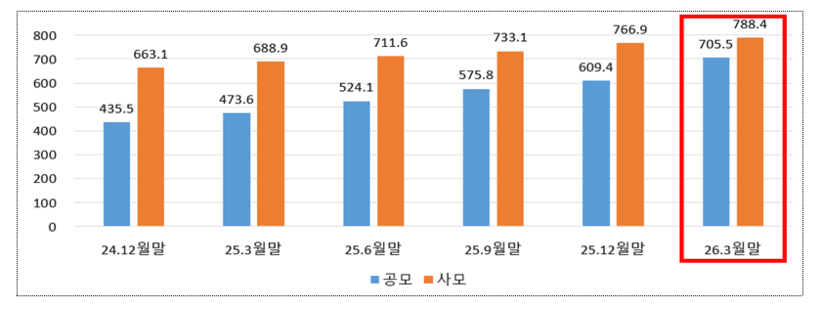
Fund Net Assets Near 1,500 Trillion in Q1… ETF Frenzy Drives an 8.5% Increase This Year - Seoul EconomySupported by a strong stock market and the popularity of Exchange Traded Funds (ETFs), the size of domestic funds surged significantly in the first quarter of this year. According to the '2026 Q1 Fund Market Trend' released by the Korea Financial Investment Association on the 30th, the total net assets of all funds (public and private) as of the end of last month were 1,493 trillion 900 billion won.
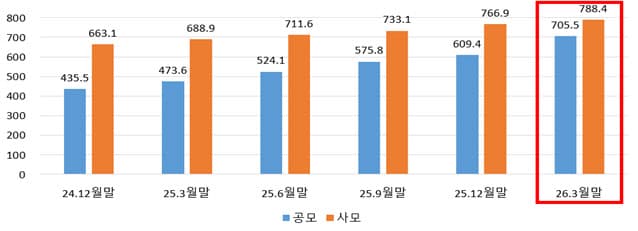
Net Asset of Fund Market Approaches 1,500 Trillion Won in Q1...Public Offering Funds Surge with ETFs - EdailyIn the first quarter of this year, the total net assets of the domestic fund market approached 1,500 trillion won. The stock market's strength led to a significant influx of funds into equity funds and exchange-traded funds (ETFs), with public offering funds leading overall market growth. According to the '2026 Q1 Fund Market Trend' released by the Korea Financial Investment Association on March 30...
 뉴스핌19 hours ago
[Morning Report] 'From Deposits to ETFs'… Money Move to the Domestic Stock Market Becomes Full-Scale - News Pim[Seoul=News Pim] Reporter Kim Ga-hee: On the 30th, Youanta Securities researcher Lee Jae-won stated, "Recently, in the domestic financial market, a clear money move toward the stock market is underway," adding that "while investor deposits are hitting an all-time high, the growth rate of bank won deposits is slowing down, and demand deposits are also 202