Structural Shifts and Growth Outlook in the KOSDAQ Active ETF Market

Recently launched KOSDAQ active ETFs have attracted strong interest from individual investors, with net purchases totaling KRW 1.226 trillion. KoAct KOSDAQ Active, TIME KOSDAQ Active, and PLUS KOSDAQ150 Active ETFs each pursue differentiated strategies—focused on growth industries, large caps, and selective blue chips or promising stocks respectively—aiming to deliver returns that outperform their respective benchmarks. This surge has driven higher trading volumes and channeled investments into undervalued small- and mid-cap stocks, as government policies and asset manager strategies align to foster a structural evolution in the KOSDAQ market.
Regulatory reforms have further accelerated capital inflows, removing the requirement for active ETFs to maintain a set correlation with their reference indices. Fund managers are now freer to adjust holdings and weightings, leading to a potential increase in the weight of growth-oriented small- and mid-cap stocks and greater performance differentiation among products. While these changes are expected to spur innovation, concerns about increased market volatility also remain.
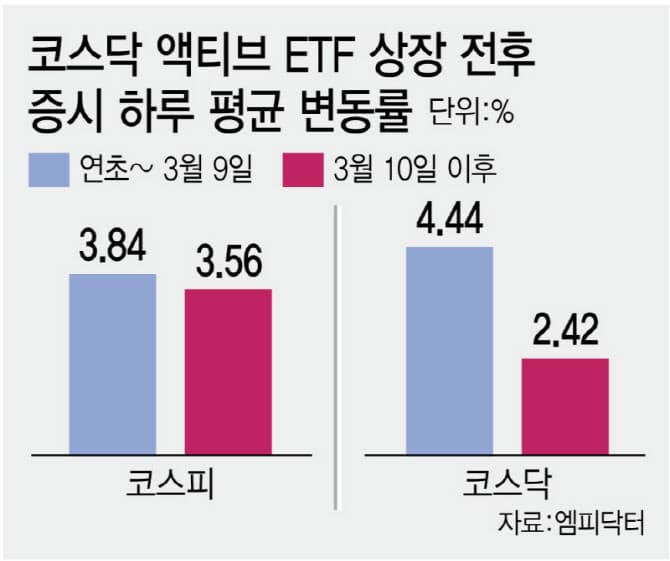
Despite the external shocks from geopolitical tensions in the Middle East, the KOSDAQ market has experienced reduced volatility, largely due to inflows into active ETFs and increased participation by institutional investors. However, the risk profile of small caps necessitates continued caution. Additionally, with 38 companies set for delisting by 2025 and a phased increase in minimum market capitalization requirements, the KOSDAQ market is striving to restore investor trust and enhance the investment environment. Investors can now choose between active ETFs, which emphasize fund manager discretion, and passive ETFs that track indices, according to their preferred investment style.
Related News
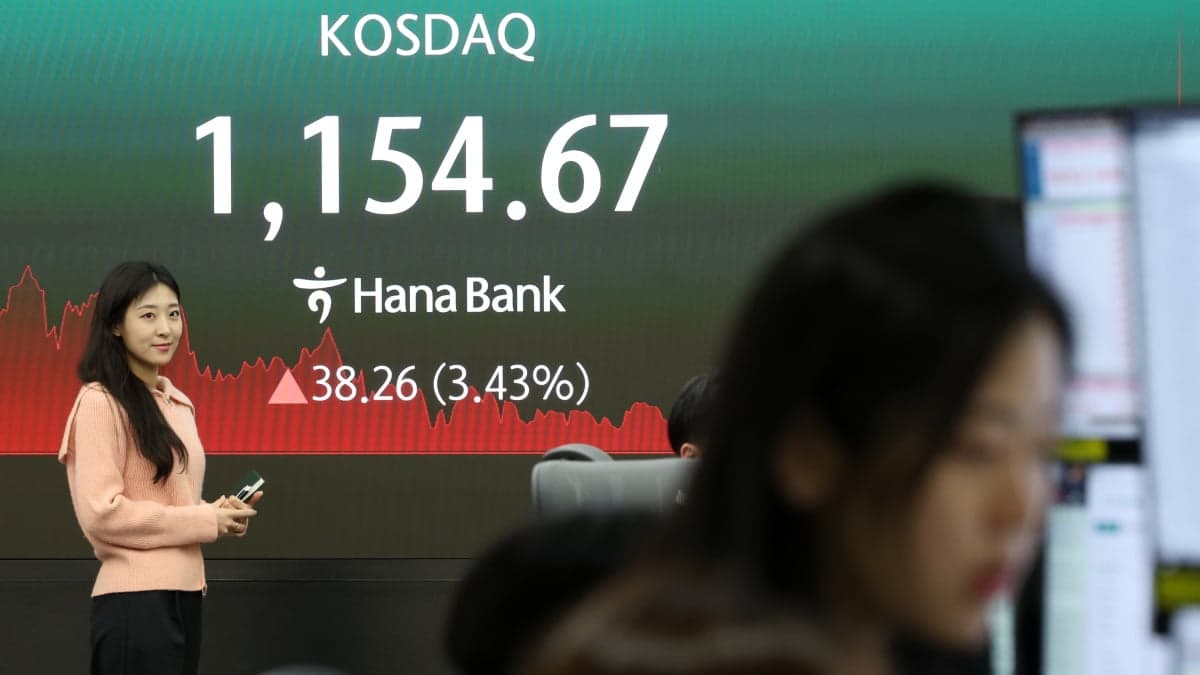
Improvement in KOSDAQ Market, Which ETF to Choose? - Korea Economic DailyImprovement in KOSDAQ Market, Which ETF to Choose?, by Journalist Shin Sung-ho, Securities
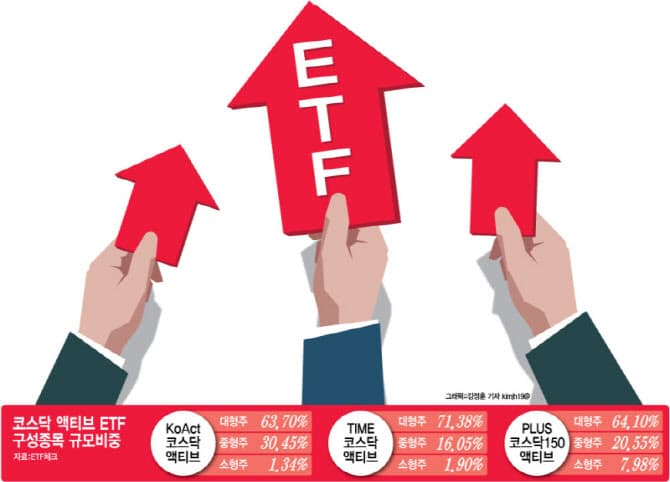
Promotion of 'Fully Autonomous Active ETF' with No Investment RestrictionsAs the government decided to ease regulations related to active ETFs, expectations for capital inflow into the KOSDAQ market are growing. Because fund managers can freely adjust the components and ratios of ETFs, there is a prospect that funds seeking excess returns will become more active. Especially with over 1,800 items being...
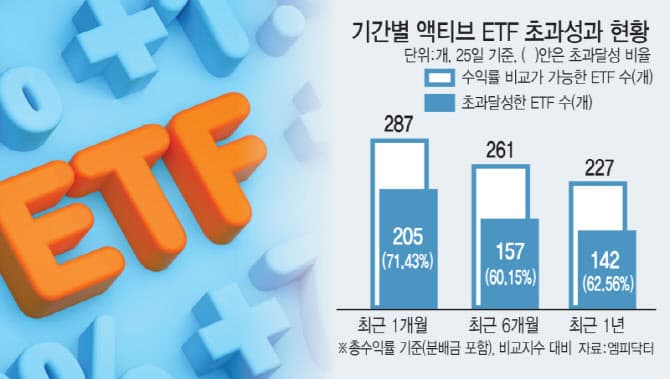
Individuals Bet 1.2 Trillion Won…Will It Reward with Excess Returns?Individual investors have swept up over 1.2 trillion won in three newly listed Kosdaq active exchange-traded funds (ETFs). This reflects expectations that selective stock-picking in the Kosdaq market can yield higher returns than index performance. However, since capital inflow does not immediately translate to excess performance, the con...
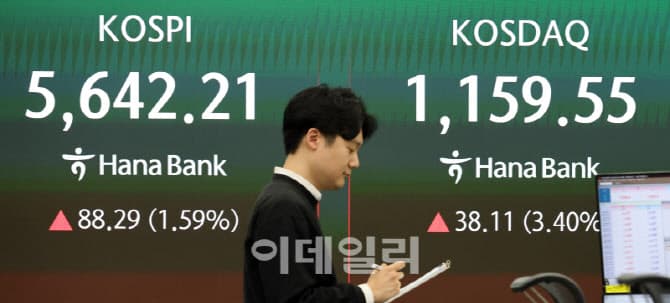
Discovering Undervalued Stocks… Leading the Inflow of New Funds with '3,000 Kosdaq Vanguard' - edaily.co.krAfter the launch of the Kosdaq Active Exchange Traded Fund (ETF), the trading volume of small and mid-cap stocks in the Kosdaq has surged. The market analysis suggests that discovering undervalued stocks that had been overlooked has led to the inflow of capital and a rise in the index for the Kosdaq market. The emergence of Active ETFs could lead to a qualitative change in the Kosdaq market...
Active ETF Shield Protected KOSDAQ in the WarThe KOSDAQ market, which was faltering due to external winds, has changed. Even in the volatile market following the Middle East war, KOSDAQ has shown limited declines compared to KOSPI. With the government's policy to revitalize KOSDAQ and the newly introduced 'KOSDAQ Active Exchange Traded Fund (ETF)', a significant inflow of funds has restricted index volatility...