Korean ETF Market Growth Spurs Volatility and Raises Investor Caution

The Korean ETF market has rapidly expanded, soaring from the 300 trillion won range earlier this year to approximately 430 trillion won, leading to a significant increase in ETFs' influence on the overall stock market. ETFs now account for around 45% of the daily trading value in Korea’s stock exchange, with AI and semiconductor stocks such as Samsung Electronics and SK Hynix experiencing heightened price swings as ETF capital flows drive sharp price fluctuations. The risks associated with leveraged ETFs have also been highlighted, prompting warnings from the IMF about the potential for greater market volatility.
Despite this growth, a notable surge in ETF delistings has accompanied the market expansion. The number of ETF delistings jumped to 51 in 2024 from just 14 in 2023. Main reasons include funds maintaining total net assets below 5 billion won and a significant mismatch between ETF net asset value and their tracking indices, both of which erode investor trust. The introduction of maturity-matching ETFs has further complicated delisting triggers, making it essential for investors to react promptly and devise selling strategies when delisting warnings are issued.
Investors should also be aware that while ETF delisting generally preserves principal, 'low price liquidation' risk can result in realized losses, and potential tax implications should be considered. Financial experts advise focusing less on low fees and more on the fund manager’s capabilities and ETF structure. Special caution is recommended for upcoming leveraged ETFs, particularly those based on Samsung Electronics and SK Hynix, as the 'negative compounding effect' could magnify potential losses.
Related News
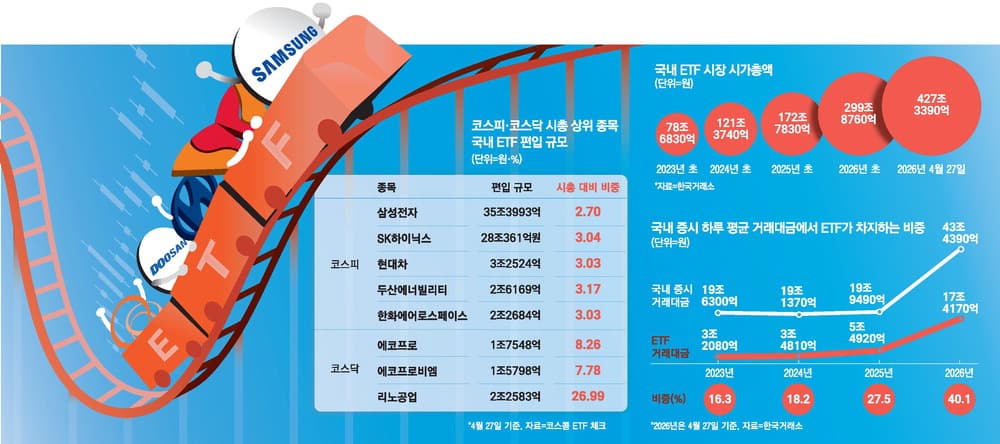
ETFs Become Stock Market's Black Hole... A Key Player in Individual Stock Prices - Maeil Business Newspaper430 trillion ETF's 'Light and Shadow', Small Investors Diversify with Small Amounts, ETF Daily Trading Volume Tripled, Stock Prices Surge or Plunge Regardless of Company Performance or Industry Trends, Concerns Over Distortion of Individual Stock Prices, IMF Warns 'Increased Stock Market Volatility'
 매일일보12 hours ago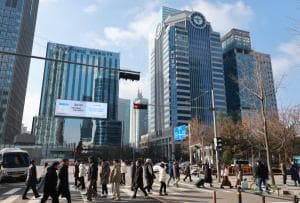
ETF Investment, How Not to End Empty-Handed - Maeil DailyMaeil Daily = Reporter Jeong Su-yeon | As the Korean ETF market is poised to reach an era of 400 trillion won in total net assets, it has firmly established itself as a national financial tool, but structural traps require investors' caution. Contrary to the past vague perception of 'safe products with no delisting risk', dozens of stocks that fail to make a profit every year are disappearing from the stock market. Reassurance of 'principal preservation' is risky, fearing loss of opportunity cost due to 'low-cost liquidation'. According to the financial investment industry on the 27th, the number of ETF delisting cases in Korea reached 51 in 2024 and 50 in 2025, with already 8 cases in the first half of this year alone.
매일일보13 hours ago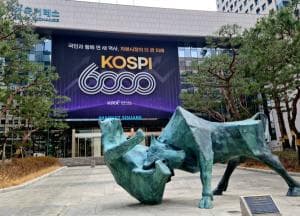
50 ETFs Disappearing Annually... 'Zombie ETFs' Failing to Perform - Maeil DailyMaeil Daily = Reporter Jung Soo-yeon | While the domestic Exchange-Traded Fund (ETF) market is experiencing rapid growth, reaching a scale of 400 trillion won, on the other side of this glamorous growth, there is a surge in 'Zombie ETFs' being delisted due to poor performance. Amongst the flood of new listings, products not chosen by investors are left in a state of dormancy and eventually face mass delisting. According to the Korea Exchange on the 27th, the number of ETF delistings in Korea surged from just 14 in 2023 to 51 in 2024, and continued with 50 delistings last year. Already 8 have been delisted this year.